
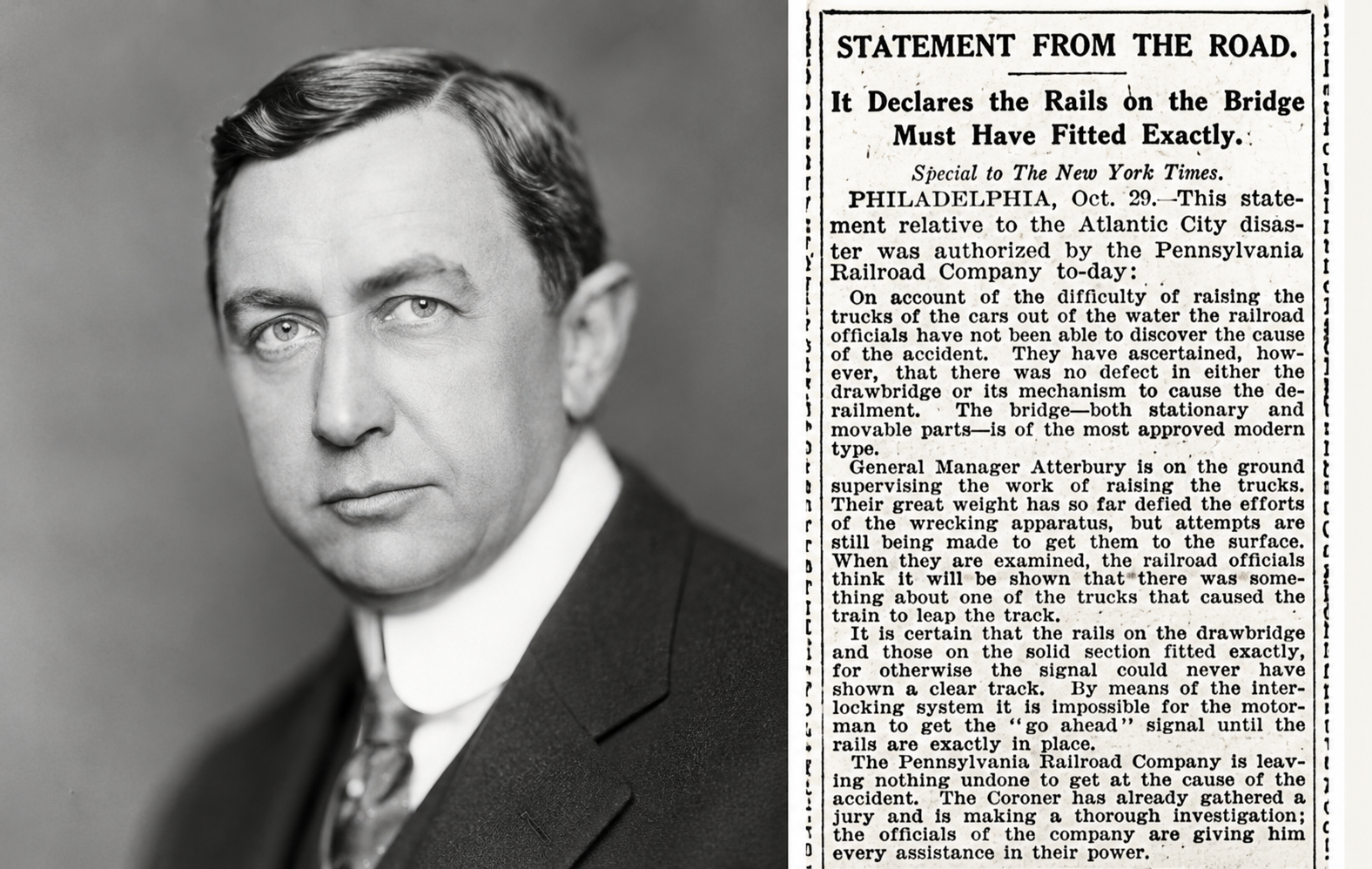
Photo Credit: Harris & Ewing
Every October 30, publicists receive a little recognition for a profession that spends much of its time making other people look good. But National Publicist Day didn’t begin with a glamorous campaign or headline-making celebrity, but with a devastating railroad accident.
On October 28, 1906, a passenger train plunged from a bridge into the water near Atlantic City, New Jersey, killing 53 people. The tragedy made national news and presented the Pennsylvania Railroad Company with a serious public relations challenge.
At the time, corporations were hardly known for their transparency. When accidents or controversies occurred, executives often withheld information, leaving journalists to pursue answers with little cooperation. Ivy Ledbetter Lee, a former journalist turned publicity adviser, proposed a different approach. Rather than retreat behind corporate silence, Lee encouraged the railroad to communicate directly with the press. This decision would become a defining chapter in public relations history.
Lee believed that organizations could benefit from providing journalists with timely, factual information instead of treating the press as an adversary. Following the accident, he helped prepare a statement outlining the railroad's account of what had happened and its efforts to investigate the tragedy. He also arranged for reporters to visit the scene.
On October 30, 1906, The New York Times published the company's statement under the heading Statement from the Road. Today, that document is widely recognized as one of the earliest examples of the modern press release. Its significance went beyond the format. Lee had demonstrated that a corporation could respond to a crisis by actively supplying information to the news media rather than relying entirely on secrecy or defensive messaging.
Of course, the statement also presented the railroad's perspective. Providing information did not make the company a neutral source, nor did it eliminate the need for independent reporting. That tension between informing the public and protecting an organization's interests would become one of the defining challenges of public relations.
The world of communications has changed considerably since 1906. A publicist no longer depends solely on newspaper editors to reach an audience. Television, digital publications, podcasts, social platforms, and independent creators have transformed how information circulates.
Press releases now compete with social posts, executive statements, influencer partnerships, and real-time commentary. Yet the fundamental questions remain surprisingly familiar. What does the public need to know? How should an organization respond when something goes wrong? And how can communication build credibility rather than simply attract attention? The answers require more than publicity.
Judgment, relationships, accuracy, and an understanding of how information influences perception. While a successful campaign may generate headlines, a successful communications strategy must also consider what those headlines mean for an organization's reputation.
National Publicist Day commemorates the anniversary of the 1906 newspaper publication and recognizes the professionals working across publicity and public relations today.
The occasion is an opportunity to celebrate the people who develop stories, cultivate media relationships, manage communications and help organizations navigate public scrutiny. It is also a reminder that the profession's history is inseparable from questions of credibility, accountability, and influence.
One hundred and twenty years after Ivy Lee's railroad statement appeared in print, the tools have evolved beyond anything an early twentieth-century publicist could have imagined. But the central challenge has endured: communicating in a way that earns attention without sacrificing trust.
Happy National Publicist Day.